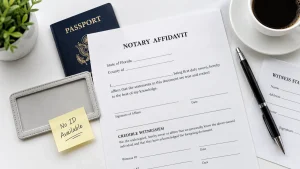


Notarizing a document overseas often begins under a deadline. A signature is needed for a visa, a school placement, a job, a property transaction, a marriage record, a power of attorney or a business filing. The signer is outside the United States, the timeline is short, and requirements that appeared simple become harder to interpret.
Early guidance from a notary office prevents wasted effort. The fastest route is rarely the nearest notary. It is the option the receiving agency will accept without question.
What Does Overseas Notarization Involve?
Overseas notarization is less about obtaining a signature and more about securing the right kind of notarization for the destination. The receiving office decides which notarial act it will recognize, and that decision shapes every step that follows.
The location where the document will be used is the deciding factor. A document signed before the wrong official, or carrying the wrong notarial wording, can be complete in every other respect and still be refused. Confirming the destination requirement before signing is the single most important step.
Which Notarization Routes Are Available?
Several routes exist, and the appropriate one depends on the document, the signer’s location and the agency requesting it.
| Route | When it applies | What to confirm |
| Local notary abroad | The signer is in the foreign country | The receiving office accepts foreign notarization |
| U.S. embassy or consulate | A U.S. notarial act is required abroad | Appointment availability and wait times |
| Remote online notary | The receiving office permits video notarization | Acceptance for the document’s purpose |
| U.S. notary on return | The document can wait until the signer is home | Whether the deadline allows it |
For paperwork bound for the United States, embassy notarial services are reliable but limited by appointment availability. Remote online notarization can be faster, as long as the receiving office accepts it. Online notarization via video may be suitable in some cases, though the document’s purpose should always determine the final choice.
Why Do Overseas Documents Get Rejected?
Most rejections have little to do with the notary and more to do with how the document was prepared. Common reasons include:
- The wrong notarial wording for the destination country
- The signer not appearing in the manner the notarial act requires
- missing identification or incomplete details on the form
- signing the document before the appointment
- requesting notarization when an apostille or authentication was also needed
A document can look entirely correct and still be returned if it does not meet the receiving office’s exact requirements. For that reason, the destination rules should be settled before anything is signed.
Preparing the Document Before Signing
A fast notarization depends on preparation. Delays are common when a signer arrives with the wrong identification, signs too early or overlooks a witness requirement. Before the appointment, the signer should confirm:
- a valid government-issued ID
- the full, unsigned document
- any witness requirements
- the name of the receiving agency
- the required notarial wording
- whether copies need certification
- whether translation is required
This is also where Florida notary services can review the type of notarization a document needs before it is sent. That brief check prevents incorrect wording, missing identification or an incomplete signing step from causing a rejection later, and it clarifies what should happen next if an apostille will also be required.
Notarization and Apostille: What Is the Difference?
Notarization and apostille serve different purposes. Notarization confirms the signing process. An apostille confirms the authority behind a public official’s signature for use in another Hague Convention country.
The distinction matters for school records, birth certificates, marriage records, powers of attorney, business papers and background checks. A document may need notarization first and an apostille afterward, while a certified public record can proceed directly to the apostille stage without a notary. Because some countries accept apostilles and others require a longer process, an embassy legalization explanation helps confirm which path applies. Florida apostille services can then move the document from notarized to internationally accepted without missing a step.
Easy Notary Solutions for Every Need
When Should a Specialist Help?
A signer can sometimes handle overseas notarization alone. Professional support becomes worthwhile when the timeline is tight, the document is legal or financial, the country’s rules are unclear or the receiving agency has strict instructions. It is particularly useful when:
- The document will be used in another country
- An apostille may be required after signing
- The signer is abroad but the document is U.S.-based
- The agency requires specific wording
- A rejection would delay travel, study or business plans
The value lies not only in completing the notarial act but in following the correct order: notarization first, certified copies if needed, then apostille or authentication when required. Reversing those steps can cost days.
Getting the Steps in the Right Order
Notarizing a document overseas quickly comes down to one principle: confirm the destination requirement before signing. The right path may be local notarization, an embassy service, remote notarization or apostille support, depending on the document and where it will be used.
For Florida residents and business owners managing this process, Notary Plus More confirms the correct sequence and reviews each document before it is sent, keeping the process moving without avoidable rejections.