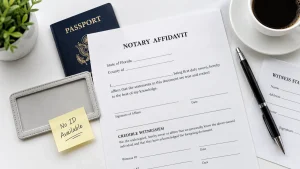


An overseas document may seem complete yet still be rejected by the receiving office. Even if the signature is present, the form filled out and deadlines approaching, the agency might request notarization, an apostille, or embassy legalization without clarifying the proper sequence. For Florida businesses, students and families, ensuring legal validity depends on following the correct order. Mistakes in notarization or legalization are among the most common reasons official documents are delayed or returned, making accuracy at each stage essential.
The requirements are set by the receiving country and agency, not by the sender. A document prepared correctly for one embassy may still be rejected by another if the certification chain does not align with that office’s expectations. Verifying the destination’s rules before signing or copying remains the most reliable way to avoid rejection.
What Legalized and Notarized Documents Mean
Notarized and legalized documents undergo two separate forms of verification. Notarization confirms a signer’s identity or certifies a copy at the point of signing. Legalization authenticates the authority of the signature, seal, or public office for international use. Neither step validates the document’s contents; notarization witnesses execution, while legalization confirms origin. Understanding this distinction prevents assuming one process replaces the other.
How Notarization Works in Florida
Notarization covers the signing stage. A Florida notary verifies the signer’s identity, witnesses the signature, or completes another permitted notarial act. Private documents such as powers of attorney, consent letters, company resolutions and sworn statements generally require notarization before proceeding.
Preparing Documents for Notarization
The document should remain unsigned until the notary appointment. Signing beforehand often necessitates restarting with a fresh copy, as most notarial certificates require the signature to occur in the notary’s presence.
Finalizing Notarization Steps
Once identification and required certificate wording are confirmed, Florida notary services can complete the notarial act. The certificate language must match what the receiving country expects, since incomplete or incorrect wording is a frequent cause of rejection at later stages.
Choose Right Notary Solution for Your Needs
Overseas Document Legalization Requirements
Once a document is properly notarized, the next step depends on the destination country. A member of the Hague Apostille Convention generally accepts an apostille, issued by a state or federal authority to confirm the origin of a public document. A non-Hague country typically requires an authentication certificate followed by embassy or consular legalization.
This is where document authentication becomes country-specific. A certified Florida birth certificate usually follows a public record route, while a private power of attorney needs a completed notarization before an apostille service can be requested. Federal records processed via the FBI Apostille follow a separate channel through the U.S. Department of State, not the state-level apostille. International Apostille requirements vary for documents from outside Florida, so confirming jurisdiction early prevents wasted submissions.
Preventing Notarization and Legalization Issues
Most delays begin before a packet reaches a state office or embassy. Common mistakes include:
- Submitting a photocopy instead of a certified record
- Requesting an apostille for a non-Hague destination
- Missing witness or identification requirements during signing
- Using a notary whose commission cannot be verified
- Translating the wrong version of the document
- Allowing too little time for mail and consular processing
Translation adds an additional layer of complexity. Some receiving offices require the original document to be legalized before translation, while others request certified translations of both the document and the apostille. Transcript Authentication for academic records, in particular, often follows a specific order set by the requesting institution, so translation should never replace proper authentication.
Difference Between Legalization and Notarization
| Stage | What It Confirms | Who Typically Handles It |
| Notarization | Identity, signature, or permitted copy certification | A commissioned notary |
| Apostille | Origin of a public document for a Hague country | State or federal authority |
| Embassy Legalization | Authentication for a non-Hague country | State, federal and consular offices |
Some documents must go through all three stages, while others require only one, depending on the type and destination. Reviewing the sequence against the receiving office’s instructions before submission ensures no step is skipped or performed out of order. This careful verification is crucial when you need to notarize document overseas, as following the correct order prevents delays or rejections by international authorities.
Final Thougts
Verifying the written requirements of the receiving office before signing, copying, or translating documents is the most reliable way to prevent rejection. Ensure names, dates and titles are consistent across all records, as even minor discrepancies may require resubmission. Specialist review is especially valuable when multiple offices are involved, deadlines impact property closings, or overseas filings demand precise certification. Allowing extra time for mail delivery and consular processing further reduces the risk of missing submission deadlines.
Notary Plus More reviews document type, destination country and requested certification before the signing stage begins. The team assists with Florida notarization and apostille preparation and identifies when a document is federal, foreign-issued, or likely to require embassy legalization instead. Confirming these details early helps prevent a rejected packet and a missed overseas deadline.