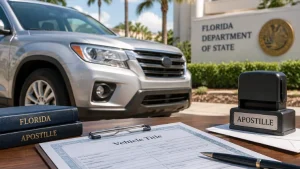


A Florida business preparing a contract for an overseas partner may face significant delays when the correct certification route is misunderstood. The same issue can affect birth certificates, school records and powers of attorney intended for use abroad. Even when a document appears complete, a foreign authority may reject it if the required apostille is missing or an apostille look alike certificate has been attached instead of a valid one.
For anyone asking, “How does the apostille process work?”, the answer depends on several factors. The correct procedure is determined by where the document was issued, the type of document involved and the country in which it will be used. Understanding these requirements before submission can prevent avoidable delays, rejected applications and additional processing costs.
Understanding the Apostille Process
An apostille is an official certificate that confirms the authenticity of a public official’s signature, the capacity in which that person acted and the seal or stamp attached to the document. It verifies the origin of the document, but it does not confirm that the information within the document is accurate or legally valid.
The apostille process applies when the receiving country is a member of the Hague Apostille Convention. When a document is intended for a non-member country, it generally requires a different process involving authentication followed by embassy or consular legalisation. Further information about this distinction can be included through the International Apostille guidance.
Types of Documents That Require an Apostille
Many state-issued, notarized and federal documents may qualify for an apostille once they have been prepared correctly. Common examples include:
- Birth and marriage certificates
- School transcripts and diplomas
- Powers of attorney
- Business formation and status records
- FBI background checks processed through FBI Apostille channels
Each document type follows its own preparation and authentication requirements. A process that applies to a certified birth certificate may not apply to a notarized power of attorney or a federal background check, so the document must be reviewed before it is submitted.
The Apostille Process Step by Step
The process to apostille documents becomes easier to follow once the correct issuing authority has been identified. Before submission, the document must be prepared in the required format and checked for any missing signatures, certifications or notarization details.The next step is to confirm whether the record should be handled by a state or federal authority. Reviewing these requirements in advance helps prevent avoidable delays and reduces the risk of the request being returned for correction.
Document Review and Preparation
Vital records generally require an official certified copy rather than a standard photocopy. Notarized documents must contain complete notarial wording, a valid notary commission and the required signature and seal.
Reviewing these details before submission helps identify missing certifications, invalid notarization or other issues that could cause the request to be returned. The preparation stage may vary depending on whether the document is a public record, a private document or a federally issued record.
Submission to the Correct Authority
Once the document has been properly prepared, it must be submitted to the authority responsible for records issued from that jurisdiction. A complete request usually includes the eligible document, the required application form, the destination country, an accepted payment method and a prepaid return envelope or delivery arrangement.
Sending the document to the wrong state or federal office can delay the process significantly. The issuing location of the document, rather than the current location of the document holder, usually determines where the request must be submitted.
Choose Right Notary Solution for Your Needs
Who Can Issue an Apostille Certificate?
The Florida Department of State is the competent authority for eligible Florida-issued and Florida-notarized documents. Federal documents, including certain FBI background checks, follow a separate process through the U.S. Department of State.
A notary public or private apostille service cannot issue the apostille certificate. These professionals may assist with document preparation, notarization, submission and delivery, but the apostille itself must come from the designated state or federal authority.
Does a Document Need to Be Notarized First?
Some documents must be notarized before an apostille can be requested, while certified public records follow a different procedure. A power of attorney, affidavit or personal statement, for example, may require a valid notarial act before it can be submitted for an apostille. Government-issued records such as birth or marriage certificates are generally processed using certified copies issued by the appropriate records office. They usually do not require separate notarization before submission. People who search do apostille expire should know that the certificate itself generally has no fixed expiration date, although the receiving authority may impose time limits on the underlying document.
Apostille Certification for Academic Records
Students applying to schools, universities or professional institutions overseas may be asked to submit authenticated academic records. A school transcript apostille for admissions verifies the authenticity of the recognised signature or seal associated with the document, helping the receiving institution evaluate the record.
The process commonly begins with obtaining an official or certified transcript from the school registrar. Depending on the document and destination country, additional notarization or certification may be required before the apostille request is submitted. More detailed guidance can be provided through the Transcript Authentication service.
How Long the Apostille Process Can Take
Processing time depends on the document type, issuing authority and selected submission method. Requests submitted by mail, in person or through a courier may follow different timelines, while incomplete paperwork or high processing volumes can lead to additional delays. A professional Florida notary service can help review the document requirements before submission and identify issues that may slow the process.
An apostille certificate does not usually contain its own expiration date. However, the organization receiving the document may require the underlying record to have been issued within a specific period. Applicants should confirm any document-age requirements before beginning the process.
Reasons an Apostille Request May Be Rejected
Many returned or rejected apostille requests result from preventable preparation errors. Common issues include:
- Missing original signatures
- An expired or incorrect notary commission
- A photocopied vital record submitted instead of a certified copy
- Payment provided in an unaccepted format
- A missing prepaid return envelope
- Submission to the wrong state or federal authority
When a request is rejected, the document holder may need to obtain a new certified record, complete the notarization again or correct the submission packet before reapplying. If the issue involves an incomplete or invalid notarial act, Mobile Notary Services can help complete the required notarization correctly before the document is resubmitted to the appropriate authority.
Final Thoughts
Notary Plus More assists South Florida residents and businesses with document review, submission planning and proper routing between state and federal authorities. Support is available for business owners managing corporate records, families preparing personal documents for international use and students submitting academic records for admission abroad.
Each request is reviewed based on the document type, issuing authority and destination country rather than through a one-size-fits-all process. We can identify the appropriate authority, check the document before submission and help reduce the risk of delays, rejection or return.