

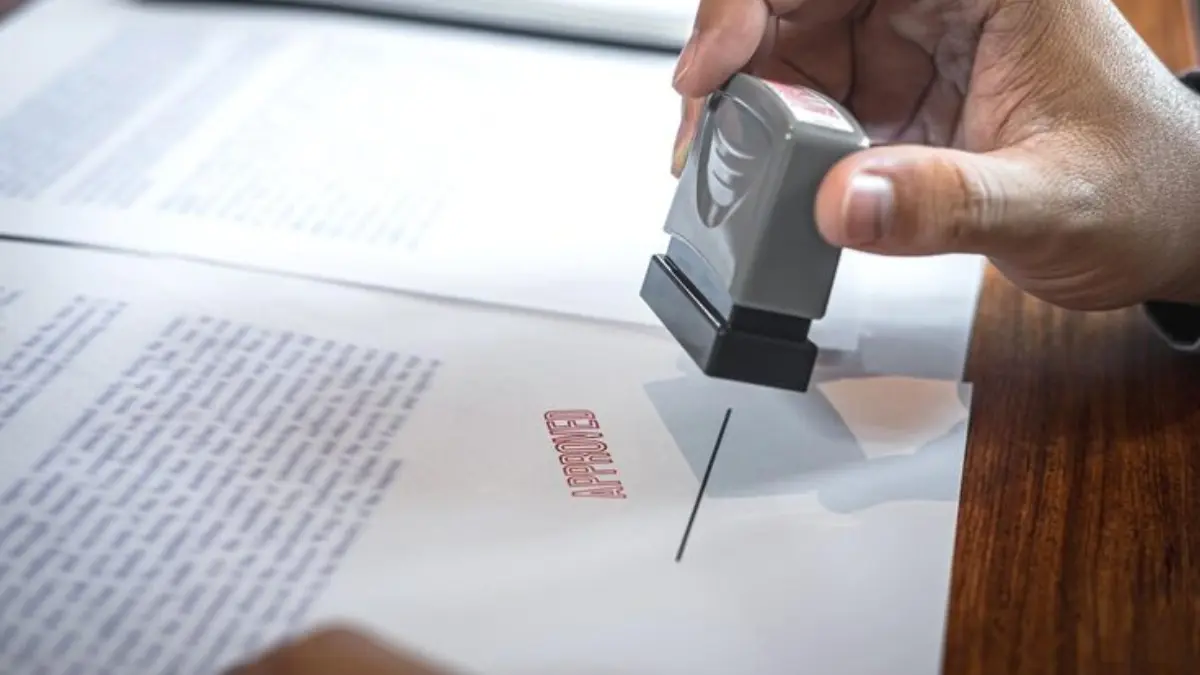
A notarized document carries legal weight because it confirms that a signer appeared before a commissioned notary, verified their identity and completed the notarization process correctly. When that process is falsified, the consequences can extend far beyond a single document. A fraudulent notarization can delay a closing, disrupt a filing, or interrupt an international submission at a critical stage.
Understanding how to spot a fake notary stamp, including the difference between a notary seal vs stamp and knowing the requirements a legitimate notarization must meet helps protect notaries, businesses and signers from potential fraud. This knowledge allows individuals to verify documents with greater confidence before relying on them.
How Fake Notary Stamp Fraud Happens
A fake notary stamp is created to imitate the seal of a legitimate, commissioned notary. Fraudsters may use publicly available information, such as commission numbers, names and expiration dates, to reproduce a seal impression on a document that was never properly notarized. In other cases, a genuine notary seal may be stolen, used without authorisation, or applied after the notary’s commission has expired.
The risks extend beyond a single incorrect signature. A fraudulent notarization can affect the authenticity of contracts, deeds, powers of attorney and other documents that rely on proper notarial verification. Once a fake notary seal becomes part of an official record, correcting the issue may require legal review, updated filings and in some situations, involvement from the appropriate authorities.
How to Spot a Fake Notary Stamp
A fake notary seal is not always easy to identify by appearance alone. A stamp may look clear and correctly placed while still being connected to an invalid notarization. Verification requires reviewing the stamp, notarial certificate, signer details and official records rather than relying only on visual appearance.
Common Red Flags in a Notarial Certificate
| Red Flag | Why It Raises Concern | Next Check |
| Missing commission details | Florida seals require specific identifying information | Compare details with state records |
| Expired date | The notarization may have occurred outside the notary’s active commission period | Confirm the notarization date |
| Name mismatch | The stamp may have been copied or altered | Verify the commissioned name |
| Incomplete certificate | The notarial act may not have been properly documented | Review all required fields |
| Unfamiliar signature | The signature may not belong to the notary of record | Contact the notary directly |
Additional Signs of a Suspicious Notarization
Beyond the certificate itself, additional details may require further review, including:
- Inconsistent fonts or spacing within the seal impression
- Blurred or altered areas on an otherwise clear stamp
- A county listed on the seal that does not match the signing details
- No indication that an acknowledgement or oath was properly completed
- A notary who cannot confirm handling the transaction
These signs alone do not always confirm fraud. A worn stamp can create an uneven impression and administrative mistakes may appear suspicious without being intentional. A proper records review and signature verification should be completed alongside any visual inspection before reaching a conclusion.
What Makes a Florida Notary Seal Valid
Florida law establishes clear requirements for what a valid notary seal must include. For paper notarizations, the stamp must be reproducible in black ink and display the words “Notary Public-State of Florida,” the notary’s commissioned name, commission number and expiration date. The notary’s printed, typed, or stamped name must also appear beneath the signature line.
The notarial certificate has additional requirements that document the Florida county where the act occurred, the type of notarial act performed, the date, the signer’s name, the method of appearance and the identification used to verify identity. Both the notary’s signature and seal must be present for the notarization to be properly completed.
The Florida Department of State provides an online commission search that allows individuals to verify a notary’s name, commission number and expiration date. Comparing these details with official records is one of the most effective ways to identify an invalid or expired commission.
Choose Right Notary Solution for Your Needs
Protecting Your Notary Seal and Commission
Under Florida law, a notary’s seal and commission certificate are considered personal property, even when an employer purchases them. This responsibility requires notaries to protect their tools from loss, theft, or unauthorised use.
The following practices help reduce the risk of misuse:
- Store the stamp in a secure, locked location
- Carry it personally during mobile appointments instead of leaving it in shared areas
- Avoid storing it in unattended office spaces
- Limit public sharing of completed certificates
- Maintain accurate records of every completed notarization
- Destroy expired stamps to prevent future misuse
Proper recordkeeping and secure storage make it easier for notaries to confirm which acts were genuinely performed while protecting sensitive identification information.
Responding to Suspected Notary Fraud
A lost, stolen, or misused seal should be treated as a serious matter rather than a minor inconvenience. Florida law requires written notice to the appropriate authorities when a notary believes their seal has been lost, stolen, or obtained by another person without permission. The notary should preserve the questionable document along with related communications and appointment records. Parties involved in the transaction, such as employers, title companies, or attorneys, may also need to be informed. Law enforcement involvement may be necessary when impersonation, theft, or altered official records are suspected.
Improper seal use can carry serious consequences and notary penalties highlight why accurate certificates and proper notarization procedures are essential for maintaining document integrity beyond a single transaction.
What to Do When a Notary Seal Is Misused
Confirming whether a notarization is authentic should not rely on the stamp alone. A proper review includes examining the seal, notarial certificate, commission details and supporting records together. Florida notary stamp requirements explain the elements a valid seal should contain, providing a reliable reference when comparing documents against official standards. A qualified notary service can help review notarial details, verify commission information and advise whether additional notarization steps may be required.
A qualified provider cannot resolve ownership disputes or offer legal advice, but can review a notarial certificate, verify commission details, and advise whether a new notarization is required. Florida Notary Services supports individuals and local businesses whenever a document requires a properly completed notarial act. Documents intended for use overseas may also require Florida Apostille Services once the underlying notarization has been confirmed. Proper verification helps ensure documents meet the necessary requirements before they are submitted or relied upon.
Final Thoughts
Notary Plus More helps clients across South Florida determine the correct next step, treating a stamp as a single element of the review rather than proof of authenticity on its own. A careful comparison of the seal, the certificate and the surrounding facts remains the most reliable method for confirming that a notarization is genuine.
This approach helps individuals and businesses identify potential issues early and take appropriate action before relying on questionable documents. Proper verification protects the integrity of important records and supports confidence in the notarization process.