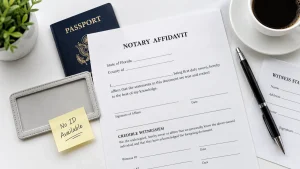


Most people do not think about a power of attorney until something forces the issue. A sudden illness. A real estate closing where the owner cannot show up. A family member who needs someone to step in. By that point, having the wrong document or no document at all becomes a real problem.
Florida recognizes three active types. Each serves a different purpose and choosing the wrong one can get a document rejected right when it matters most.
| Type | What It Covers | Valid If Incapacitated? |
| Durable | Financial and legal decisions | Yes |
| Limited | One specific task or transaction | No |
| Healthcare | Medical decisions | Yes |
Florida law requires two witnesses and a notary at signing for these documents to hold up legally.
Durable Power of Attorney
This is the most widely used type and the foundation of most estate planning in Florida. It lets a named person called an agent handle financial and legal matters on someone else’s behalf. What makes it durable is that it stays valid even if the person who signed it becomes incapacitated.
That last part matters more than people realize. Without the durable designation, authority ends the moment the principal can no longer make decisions, which is often exactly when that authority is needed.
Two witnesses and a notary must be present at signing. Banks, courts and financial institutions will not accept a document that skips either step. Whether someone comes for an in-person notary appointment or arranges to have a notary come to them, getting both requirements met at the same time is the only way to avoid problems down the road.
Limited Power of Attorney
A limited power of attorney is built for one specific job. Once that job is done, the document expires on its own.
Common uses include signing closing documents when the owner cannot attend, completing a one-time bank transaction, or transferring a vehicle title. It is not a gap in authority. It is a deliberate boundary that keeps things controlled when someone only needs to delegate one thing.
Healthcare Power of Attorney
Florida calls this a healthcare surrogate designation. It gives a trusted person legal authority to make medical decisions if the principal cannot speak for themselves, things like consenting to treatment, authorizing surgery, or making end-of-life care decisions.
This document only activates under specific medical conditions, which is what separates it from a durable POA even though both are often signed together. Two witnesses and a notary are required here as well. A healthcare surrogate designation that was not properly signed carries no legal weight in a hospital, regardless of the relationship between the people involved. For principals already in a care facility or who cannot travel, a mobile notary can come directly to the location anywhere across South Florida.
One Thing Many People Get Wrong: Springing POAs
Some people come across the term “springing power of attorney” and assume it is still an option in Florida. It is not. Florida no longer allows springing powers of attorney for documents signed after October 1, 2011. Any new document must take effect immediately upon signing.
If someone signed one before that date, it may still be valid, but worth reviewing with a notary or attorney before relying on it.
Why Notarization Is the Step That Cannot Be Skipped
For durable and healthcare documents, Florida law requires the principal’s signature to be witnessed by two people and acknowledged by a notary. A document signed without a notary present is not enforceable, no matter how official it looks on paper. Research from the American Bar Association found that the vast majority of financial institutions reject POAs without proper notarization, even in states where witnesses alone are technically sufficient by law.
This is one of the most common reasons these documents fail. They were signed informally, the notary seal was missing, or the wrong number of witnesses were present. The document looks fine until someone actually tries to use it. Florida’s specific notarization requirements for a power of attorney go further than most states, requiring both witnesses and a notary together, which is why so many documents signed casually end up being rejected.
What Can Get a Florida Power of Attorney Rejected
Even a well-written document can be thrown out if the signing process had a flaw. The most common reasons include fewer than two witnesses at the time of signing, a missing or incorrectly applied notary seal, the principal being incapacitated when they signed, document language that does not meet Florida’s statutory requirements, or the named agent having a disqualifying conflict of interest under Florida law.
Getting the execution right from the start is the only way to avoid finding out about these problems at the worst possible time.
Easy Notary Solutions for Every Need
After the POA Is Signed: What Most People Forget
Signing the document is only half the job. What happens next determines whether it actually works when someone tries to use it.
Make Certified Copies Before Anything Else
The original signed and notarized POA should never be the copy that circulates. Banks, medical facilities and government agencies will want their own copy on file and handing out the original risks losing it entirely. Most institutions will accept certified copies, which are photocopies the notary has confirmed match the original. Making several at the time of signing saves a trip back later.
Registering With Banks and Financial Institutions
A POA does not automatically give an agent access to someone’s accounts. Most banks require the document to be submitted and reviewed by their legal or compliance team before the agent can act. Some have their own internal POA forms they prefer to use alongside the principal’s document. Getting this done while the principal is still available and can confirm their intent makes the process far smoother than trying to do it in a crisis.
Sharing the Document With the Right People
The agent named in a durable or healthcare POA needs a copy. So does the principal’s primary care physician if a healthcare surrogate designation is in place. Keeping the document locked away where only the principal knows about it defeats the purpose entirely.
Knowing When It Can Be Revoked
A POA can be revoked at any time while the principal still has legal capacity, but revocation has to be done correctly. A written revocation signed and notarized with the same formality as the original is the safest approach. Anyone who received a copy of the original document also needs to be notified directly. Simply destroying the principal’s copy does not revoke authority already given to someone else.
When the Document Needs to Work Outside the United States
For anyone managing affairs across borders, handling property abroad, dealing with a foreign financial institution, or acting on behalf of someone in another country, a notarized POA alone is usually not enough. Most countries that are party to the Hague Convention require an apostille before the document is recognized, which is a separate certification step that verifies the Florida notary’s signature and seal for international use. It is worth sorting out before the document is needed, not after.