
When a school, court or government office asks for an official copy of a document, most people assume any copy with a notary stamp will do. That assumption is where the problem starts. The wrong version gets rejected, paperwork stalls and the process has to start over.
Understanding the difference before anything is submitted saves time and avoids a frustrating back and forth.
What Is a Certified Copy?
A certified copy is issued and confirmed by the official office that holds the original record. A certified birth certificate comes from a vital records office. A certified court record comes from the court clerk. The authority behind it comes from the fact that the issuing office controls the original.
This is why certified copies carry more weight than any photocopy, regardless of how it is presented.
They are most commonly required for:
- Birth, marriage or death records
- Court orders and legal filings
- Business formation documents
- School transcripts
- Immigration and overseas paperwork
In plain terms, a certified copy means the issuing office is confirming the copy matches what is in its official files.
What Is a Notarized Copy?
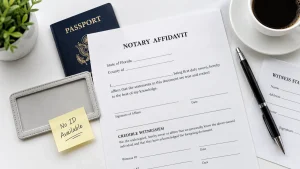
A notarized copy means a notary has completed a notarial act connected to the document. What that actually covers depends on state law.
In some cases, a notary may confirm that a copy matches an original, if the document type is permitted. In other cases, the notary may only notarize the signer’s statement that the copy is accurate. What makes the act legally valid is not just the signature. The notary stamp and seal carry specific requirements under Florida law and both must be properly applied for the notarization to hold up.
A notary does not turn any photocopy into an official certified record. The scope is limited to what state law permits.
Where the Confusion Usually Happens
The table below shows why one cannot simply replace the other:
| Certified Copy | Notarized Copy | |
| Who confirms it? | Official record holder | Notary public where permitted |
| Main purpose | Confirms copy matches official record | Supports identity, statement or copy attestation |
| Common source | Court, state office, school or agency | Notary appointment |
| Best for | Public records and official files | Private documents when accepted |
If an agency asks for a certified birth certificate, a notarized photocopy will not satisfy the requirement. Each receiving office sets its own rules and this mix-up is one of the most common reasons documents get sent back.
Why Getting It Wrong Causes Real Delays
Submitting the wrong copy type can hold up travel plans, school admissions, business filings and legal proceedings. Many people move forward assuming a notary stamp covers everything, then find out the office needed a certified record from the original agency all along.
Florida adds a specific limitation here. A Florida notary cannot certify copies of certain public records when certified copies are available from the record custodian. That covers most vital records and official government documents.
For documents going abroad, the consequences are more serious. Document authentication is the broader process that determines whether a foreign office will accept what is submitted. Getting the copy type wrong at the start creates problems at every step that follows.
Depending on the situation, what is actually needed may be one or more of the following:
- A certified copy from the issuing office
- A notarized copy certification for an eligible document
- A notarized statement from the document holder
- An apostille if the document is going abroad
Easy Notary Solutions for Every Need
When a Notary Is the Right Step
A notary can help when the document is eligible for notarization under state rules. Private records, business documents, diplomas, contracts and personal letters are generally more straightforward than government-held public records.
Identity verification is part of every properly completed notarial act. For situations where meeting in person is not practical, electronic notarization is a valid option in Florida and carries the same legal standing as an in-person appointment.
If the document is heading overseas, notarization is usually not the final step. An apostille is typically required after the document is correctly prepared. For countries outside the Hague Convention, embassy legalization may be needed instead. Confirming which applies before submitting avoids having to redo the process.
The Straightforward Answer
Follow the exact instructions from the receiving office. Certified copy requests go to the official record holder. Notarized copy or statement requests involve a notary. International documents usually require an apostille after the correct preparation is complete.
Getting this sequence right from the start matters. A mistake caught before submission takes minutes to fix. The same mistake caught after takes considerably longer.When the document type is unclear or the process involves more than one step, working with a notary who knows Florida rules and international requirements makes a real difference. Notary Plus More handles exactly these situations, from confirming the right document type to completing notarization and apostille steps without avoidable back and forth.