
Using AI tools to translate legal documents can cause serious problems that affect your business, your rights, and your money. AI makes translations fast and cheap, but it often makes dangerous mistakes in legal documents that can completely change the meaning of contracts and official papers. A small error that nobody notices during a quick read can change the meaning of a whole agreement and cause big disputes later.
This is why it is important to understand the risks before using AI for legal translation. Legal documents are not general content; they use precise language with exact legal meaning. Even small AI errors can change rights and obligations, which create serious legal consequences.
Understanding Legal Document Translation AI
A contract can look good after AI translation. But it can have one dangerous mistake. A missing word, a wrong date, or a softer meaning might not be noticed at first. The words sound natural, but the legal meaning has changed.
Legal language is different from normal conversation. Words like “shall,” “may,” “waive,” and “liable” have specific legal meanings. AI might change these words to simpler ones that sound better but create a different legal duty. This is a big problem. Numbers, dates, and names are also risky. One wrong digit in a property address, ID number, or payment amount can cause big delays. The mistake might look small, but it can have huge consequences.
Why Legal Translation Needs to Be Accurate
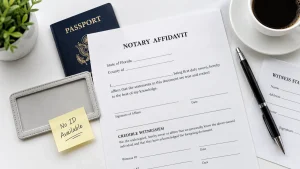
Translation is not the same as notarizing a document or obtaining an apostille, as each serves a different purpose in the legal process. Translation focuses on converting language accurately, while a notary verifies the identity behind a signature. An apostille, on the other hand, is an official certification that validates a public document for international use.
In many cases, document authentication works alongside these steps to ensure the document is legally recognised and accepted by courts or government authorities. Courts and official agencies often require certified translations accompanied by a signed declaration from a qualified translator confirming accuracy. An AI tool cannot provide this certification or accept legal responsibility for errors, which is why human verification remains essential.
Common Errors from AI Translation
When a deadline is tight, AI translation problems get worse. A rejected visa form, court document, or business paper has to be retranslated from the start. This costs time and money.
| AI Translation Problem | What Can Happen |
| Missing page or section | Filing gets rejected |
| Wrong legal word | Rights get misunderstood |
| Changed name or date | Records do not match |
| No translator signature | Office refuses the paper |
| Bad formatting | Stamps and marks lose meaning |
Keeping Private Information Safe
Legal documents often contain sensitive information such as addresses, bank details, medical records, and family data. Uploading these files to a free AI tool can expose private information, as it may be stored, accessed, or used for training purposes.
Before using any tool, it is important to ask key questions:
• Is the document stored after translation
• Can the content be used to train AI systems
• Who has access to uploaded files
• Where is the data stored
• Can files be permanently deleted
Lawyers and businesses have a legal duty to safeguard client confidentiality. Relying on free AI tools for sensitive legal documents introduces unnecessary risk.
When to Use AI Translation Safely
AI can help in some ways. It can help you understand what a document is about before you talk to a real translator. But for official legal work, you need a human translator.
Here is the safe way to use AI:
• Use AI only to understand the general content
• Remove private information before uploading
• Keep the original document next to the AI translation
• Have a real translator check every line
• Check what the court or office requires
• Have a lawyer review anything that affects your rights
Choose Right Notary Solution for Your Needs
How Translation Errors Can Change Legal Meaning
A company uses AI to translate a contract with a foreign supplier. The AI misinterprets key terms, making the payment conditions appear more flexible than originally agreed. Later, a dispute arises when the supplier claims a 90-day payment window, while the original contract clearly states 30 days.
At this stage, the company must involve a professional translator and legal counsel and may even need to renegotiate or recreate the agreement, which adds significant time and cost. This kind of issue is often avoidable when a qualified human translator is used from the beginning. In cases where documents also require official validation for international use, apostille services may be needed alongside accurate translation to ensure legal recognition across jurisdictions.
How to Lower Risks When Using AI Tools
Always use a certified translator for official documents and legal contracts. AI tools should only be used for draft purposes and should never be relied on for final, legally binding versions. A qualified legal professional should review all translated contracts to ensure accuracy and compliance. It is also important to maintain proper version control for all document translations to avoid inconsistencies.
For notarization or apostille requirements, it is best to work with professionals who understand both translation accuracy and legal authentication processes. Notary Plus More can guide you through every required step. Our Florida Notary Services support clients with notarization needs, while ensuring translated documents are properly reviewed before any apostille or certification process is completed.
Conclusion
Always review the final translation carefully against the original document, line by line and word by word, to ensure complete accuracy. Confirm that every detail matches the source language without omission or distortion. It is also important to check with the court, government agency, or receiving office about their specific translation requirements.
AI can assist in early drafting and basic understanding, but legal documents must be verified by a qualified professional before submission. In many cases, notary translate document requirements must also be followed for official use. Human review remains essential to protect your legal rights and ensure full compliance with applicable rules.