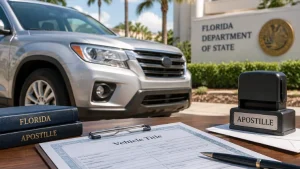


A document may be legally valid in Florida but still face acceptance issues when presented to a foreign authority. For example, a birth certificate may contain an official seal, or a power of attorney may be properly notarized, yet a foreign court, university, or government office may still require verification of the issuing authority and signature before accepting it.
This additional verification is where the apostille process becomes essential. An apostille provides a recognized method for authenticating eligible public documents before they are used internationally. Many document rejections occur when paperwork is submitted abroad without completing the required authentication process.
Can a Country Reject a Document Without an Apostille?
The answer to does a country reject documents without apostille depends on whether the Hague Apostille Convention applies between the countries involved and whether the receiving authority requires authentication. When those conditions apply, a document submitted without an apostille may be refused. The Convention established a standard process for authenticating public documents used internationally. In the United States, the correct issuing authority depends on where the document originated. Florida documents may be processed through the Florida Secretary of State, while eligible federal documents follow the U.S. Department of State process.
Without the required apostille, the receiving authority may have no recognised method to confirm the document’s origin. The document itself may be genuine, but international acceptance depends on completing the required authentication process.
What an Apostille Verifies and What It Does Not
An apostille serves a specific purpose. It verifies the signature on a public document, the authority of the person who signed it and the seal or stamp attached to the document. It does not confirm that the information contained within the document is accurate or legally valid.
Understanding why foreign countries require apostille certification starts with the need for a trusted verification process. A government office overseas cannot maintain records of every registrar, clerk, notary, or public official from another country. The apostille provides recognised confirmation from the appropriate authority, helping verify the document’s origin before acceptance.
Notarization serves a separate purpose. A notary verifies identity and completes the required act but does not determine foreign acceptance. Private documents may require Florida notary services before apostille processing, while certified government records follow a different process.
Documents Frequently Submitted for Foreign Use
International document requirements vary depending on both the document type and the destination country. Not every record follows the same authentication process.
Common documents submitted internationally include:
- Birth, marriage, and death certificates
- Diplomas and school transcripts
- Powers of attorney
- Affidavits
- Court records
- Corporate records
- Federal background checks
The source document also matters. A standard photocopy of a vital record is different from a properly certified copy, and a Florida notarized affidavit follows a different process from an FBI background check. Understanding why are foreign documents rejected often comes down to these preparation differences. In some cases, the apostille is missing. In others, the wrong document version was submitted before authentication could even begin.
Choose Right Notary Solution for Your Needs
Why Missing Apostille Requirements Cause Delays
A rejection does not always appear as an immediate refusal. Sometimes the process simply pauses until the missing requirement is resolved.
Possible Results of an Apostille Rejection
A foreign authority may return the document, request additional documentation, or delay processing until the required authentication is provided. These issues commonly affect immigration matters, international education, employment applications, marriage registration, property transactions and business filings.
| Document Problem | Possible Result |
| Required apostille missing | Document may be refused |
| Wrong authority used | Authentication may not be accepted |
| Plain photocopy submitted | Certified copy may be requested |
| Wrong legalization route | Further embassy steps may be needed |
| Translation missing | Application may remain incomplete |
Why Early Apostille Preparation Matters
The larger problem often appears after the document has already been sent abroad. The document may need to return to the United States, a new certified copy may need to be requested and additional shipping and processing costs may apply while important deadlines continue approaching.
Why an Apostilled Document May Still Be Rejected
Yes. An apostille confirms the document’s origin, but it does not guarantee acceptance for every purpose. A foreign institution may still have specific requirements regarding document age, translations, original copies, or supporting records. A university may request both a diploma and transcript. An immigration office may require a recently issued certificate. A name difference may require additional documentation to connect the records.
Before sending a document internationally, it is important to confirm:
- Whether the destination accepts Hague apostilles
- Whether an original or certified copy is required
- Which authority must issue the apostille
- Whether translation is required
- Whether the document has an age limit
- Whether supporting records must be included
For documents sent to countries outside the Hague Convention, the required process may involve authentication rather than an apostille. Understanding Legalization differences can help determine the correct route, as the U.S. Department of State identifies the appropriate process based on the destination country.
Steps to Avoid Foreign Document Rejection
The best way to prevent delays is to confirm the requirements before sending the document abroad. The document type, issuing authority, and destination country all determine the correct preparation process.
Florida apostille services can help identify the appropriate state-level process for eligible Florida documents. A provider can review preparation requirements and submission steps, but the apostille itself must come from the authorized government authority. The Florida Department of State recognizes the Secretary of State as Florida’s competent authority for apostille certification. A specialist also cannot guarantee that a foreign institution will accept a document. That decision remains with the receiving authority. Proper preparation simply reduces avoidable errors before the document begins its international journey.
Conclusion
Notary Plus More assists with Florida notarization and apostille preparation for documents intended for international use. A document seal may appear official, but international acceptance depends on following the correct authentication process. Confirming destination requirements, document versions and issuing authorities before submission can prevent avoidable delays and complications.