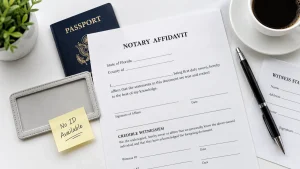


A handwritten agreement may appear less formal than a typed document, but that does not determine whether it can be notarized. Many individuals question whether a notary can accept handwritten documents, especially when they involve important personal, business, or legal matters. Under Florida law, the format of the document is not the deciding factor. The key consideration is whether the required notarization requirements are met and whether the signer can properly complete the notarial process.
A notary does not review, approve, or verify the terms written within a document. Instead, the notary’s responsibility is limited to confirming the signer’s identity, witnessing the required signature process, and completing the appropriate notarial act.
Can Florida Notaries Accept Handwritten Papers?
Florida law does not disqualify a document simply because its wording is handwritten. A common notary misconception is that handwritten documents cannot be accepted for notarization. A document may be typed, handwritten, or prepared using both formats. The relevant issue is not how the document was created, but whether the notary can lawfully notarize the signer’s signature. A notary does not certify that a document’s contents are true, accurate, or legally valid. The notary is responsible for identifying the signer, confirming personal appearance, and completing the appropriate acknowledgment or jurat.
Florida law requires the notarial certificate to contain specific information, including the date, venue, signer’s name, identification method, and the notary’s signature and seal. Legibility is essential. A bank, court, employer, or government agency may impose its own formatting requirements, and notarization does not require that organization to accept a document that is illegible or improperly prepared.
Requirements Before a Handwritten Document Is Notarized
A handwritten document should be prepared with the same care as any document submitted for notarization. Understanding when a notary may refuse your document helps prevent delays. All wording must be finalized beforehand because Florida notaries cannot notarize a blank or incomplete document. Every required field should be completed, the signer’s name should remain consistent throughout, and any unexplained blank spaces should be addressed before the appointment. The signer must present acceptable identification, appear before the notary, and arrange any witnesses required by the receiving party in advance.
A document should generally remain unsigned when a jurat or witnessed signature is required. In certain cases, an acknowledgment may apply to a signature completed earlier, provided the signer appears before the notary and formally acknowledges it. Florida law accepts identification that is current or was issued within the previous five years.
Choose Right Notary Solution for Your Needs
Choosing the Correct Notarial Act for Your Document
A notary does not choose a notarial act based on whether the document is handwritten. That decision depends on the receiving agency’s requirements, and a non-attorney notary should not interpret the document’s legal purpose for the signer. An acknowledgment confirms that a signature was made willingly and is commonly used for agreements, deeds, and powers of attorney. A jurat requires the signer to swear or affirm that the statement is true and generally applies to affidavits and other sworn statements. Florida law requires the certificate to identify the act performed, and an acknowledgment cannot replace a jurat when an oath is required.
If the required certificate is unclear, the signer should confirm the requirement with the receiving office before the appointment. The notary can then complete the requested act without providing legal advice about the document itself.
Common Issues That Prevent Notarization
Handwriting alone is not a valid reason for refusal. The concern usually relates to the document’s condition or the circumstances surrounding the signing, as explained in the existing guide to common refusal reasons. A notary may decline or pause an appointment if the document contains incomplete sections, the signer cannot provide acceptable identification, the signer is absent, the required notarial act is unclear, alterations or crossed-out wording create ambiguity, the signer appears confused or under pressure, or the notary has a prohibited personal interest in the transaction.
Corrections made after notarization may create doubts about the document’s authenticity. If substantial revisions are required, preparing a clean replacement is generally preferable to altering the original after the notarial act has been completed.
Does Notarization Make a Document Legally Valid?
Notarization does not establish a document’s legal validity. A notary’s seal cannot correct deficient wording, replace missing witnesses, or make an otherwise unenforceable agreement enforceable. It confirms only that the required notarial procedure was completed correctly.
This distinction is important for documents with specific execution requirements. A Florida power of attorney, for example, still requires the principal’s signature, two witnesses, and notarization, even when handwritten. The same applies to business agreements, affidavits, and estate documents. Proper notarization confirms the signing process but does not guarantee acceptance or legal validity. Questions about the document’s content or legal effect should be directed to a licensed attorney.
Can a Handwritten Notarized Document Be Used Abroad?
A handwritten private document intended for international use may require more than notarization. Depending on the destination country, an apostille or additional authentication may be needed. Through Florida Notary Services, the document must be properly notarized with a complete notarial statement, original signature, stamp, and seal. Photocopies are not accepted. The receiving country may also impose specific translation or formatting requirements. These details should be confirmed before the document is drafted and signed, as failing to comply may require the document to be prepared and executed again.
Final Thoughts
A handwritten document can be notarized when it is complete, the signer provides valid identification, and the required notarial act is clear. Addressing missing details or witness requirements before the appointment helps avoid delays. Notary Plus More assists South Florida residents and businesses with in-person, mobile, remote notarization and Florida Apostille Services for international documents.