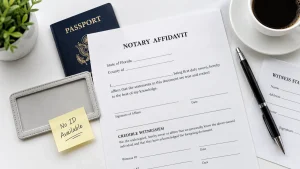


Remote online notarization sounds like the simplest option. No travel, no waiting and no working around office hours. Log in, verify your identity, sign the document and you are done in minutes.
That is exactly how it works when you come prepared. When you do not, the session stalls, gets cancelled or produces a document that cannot be legally accepted. In Florida, most RON delays come down to one thing: not knowing what the process actually requires before you log in.
Florida RON Is a Legal Notarial Act, Not a Video Call
Florida has regulated remote online notarization under Chapter 117 of the Florida Statutes since January 2020. It is not a casual video meeting. It is a formal notarial act with legal requirements around identity verification, platform compliance and session recording.
Every RON session in Florida is recorded and stored for a minimum of ten years by state requirement. A digital audit trail is also built and maintained throughout the process. That level of documentation means the bar for identity verification is higher than most people expect going in.
Not every Florida notary is authorized to perform online notarizations. A notary must complete a state-approved two-hour RON course, pay registration fees and register with the state as an electronic notary before they can legally notarize documents online. If your notary is not properly registered the session has no legal standing regardless of what was signed. This is where working with established Florida notary services removes the guesswork entirely.
Many people also walk into their first RON session carrying assumptions that do not hold up under Florida law. Several common myths about RON end up being the real reason sessions get delayed or rejected before they even begin.
The Exact Requirements Florida Law Sets for Remote Notarization
Most session failures come down to missing or mismatched information, not technical problems. Having these four things in order before you log in removes the most common points of failure.
| What You Need | Why It Matters |
| Valid government-issued photo ID | Required for credential analysis and identity proofing |
| Device with webcam and microphone | Florida requires a live audio-video session throughout |
| Stable internet connection | Session drops can trigger cancellation under state rules |
| Complete document in correct format | Missing pages or unclear text cause immediate rejection |
One detail that catches people off guard is the name match requirement. The name on your ID must match the name on the document exactly. A small discrepancy like a middle name on one but not the other is enough for the notary to pause or refuse the session.
Which IDs Florida Actually Accepts for Online Notarization
Florida law requires remote presentation of a government-issued credential followed by credential analysis through a state-approved platform. The signer uploads a photo of the front and back of a valid government-issued photo ID. The image is then analyzed by an automated system to verify its authenticity before the session proceeds.
Accepted forms of ID include:
- A valid Florida driver’s license or state-issued ID
- A US passport or passport card
- A government-issued ID from another US state
Expired IDs are not accepted under any circumstances. If your ID is expiring soon, renew it before booking your session.
What the KBA Quiz Is and Why Failing It Locks You Out
After credential analysis, Florida RON platforms run a second identity check called knowledge-based authentication or KBA. This is a short quiz generated from your public records. It may ask about previous addresses, vehicle registrations or financial history.
Florida requires this two-step identity verification process combining knowledge-based authentication and credential analysis to reduce fraud and meet the security standards set under state law.
Failing the KBA quiz twice locks you out of the session entirely. There is no override and no shortcut. The session has to be rescheduled and the identity hold may take additional time to clear. For real estate transactions or loan signings a delay like this can have serious knock-on effects, which is why having a trained notary signing agent guide you through the process in advance makes a real difference.
What a Failed RON Session Can Cost You
A failed RON session is rarely just an inconvenience. Depending on the document involved it can carry real consequences.
Real estate closings, court filings and legal submissions often run on tight deadlines. A single failed session can push a closing date back, trigger late fees or cause a document to be rejected by the receiving agency entirely. If the platform used was not state-approved the notarization itself is legally invalid and the whole process has to start over from scratch.
There are several reasons RON sessions get delayed in Florida that go beyond just a weak internet connection and knowing them ahead of time puts you in a much stronger position.
Easy Notary Solutions for Every Need
Why a Florida-Certified Notary Makes the Difference
For low-stakes personal documents with no deadlines a self-service platform may be enough. For real estate documents, legal filings, affidavits or anything with a hard deadline, working with a provider who knows Florida’s current RON rules is the more reliable choice.
A qualified notary checks that your document type is eligible for RON, confirms the platform meets state requirements and walks you through the identity verification process in advance. That preparation takes the pressure out of the session entirely.
At Notary Plus More we handle remote online notarization across a wide range of document types with session prep guidance included so nothing gets missed on the day. Whether you are an individual signing a property document or a business handling time-sensitive filings, we are available for both in-person and remote sessions statewide.
Ready to get your document notarized without the last-minute stress? Contact Notary Plus More and we will make sure everything is in order before your session starts.