
Most people treat “stamp” and “seal” as the same word. In casual conversation, that works fine. But when a notarized document lands on a desk at a courthouse, a title company, or a government office, that assumption can get the whole thing rejected on the spot. The person presenting it then has to track down the notary, figure out whether a correction is even possible and start the clock over on whatever deadline was already in play.
Understanding what these two tools actually are, what state law requires each one to contain and when one can legally substitute for the other is genuinely useful information.
What a Notary Stamp Is
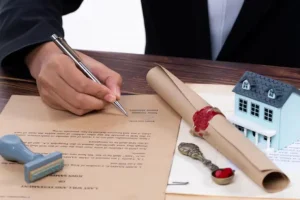
A notary stamp is an inked rubber tool pressed onto paper to leave a flat impression. That impression has to be clear enough to survive photocopying, scanning and digital archiving. Reproducibility is the entire point. A mark that disappears in a photocopy is functionally useless to any institution reviewing a copy rather than the original.
Under the 2025 Florida Statutes, §117.05(3)(a), the rubber stamp is the official seal for all paper notarizations. Every commission stamp must include:
- The notary’s full name, exactly as it appears on their commission
- The phrase “Notary Public, State of Florida”
- The commission number
- The commission expiration date
State law requires black ink only. No other color satisfies the photographically reproducible standard. Shape can be either round or rectangular. Specific dimensions are not prescribed, but the impression must be legible across its entire surface.
One detail that surprises people: when a commission ends, whether through expiration, resignation, or revocation, the notary is legally required to destroy or deface the stamp. A lost or stolen stamp must be reported to the Department of State in writing immediately. This keeps old commission information from circulating on documents signed after authority has lapsed.
What a Notary Seal Embosser Is
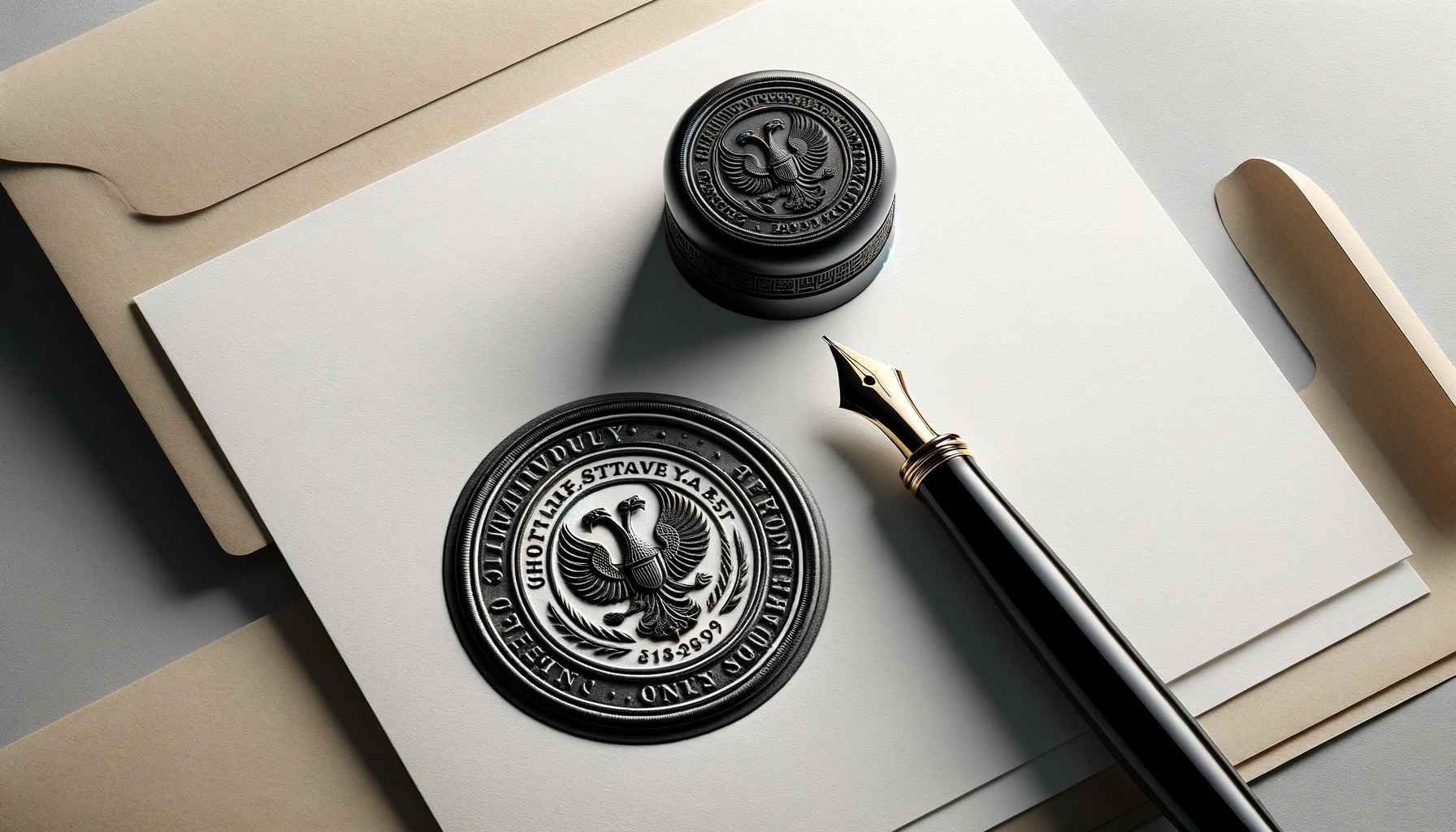
An embosser is a metal crimping device that presses a raised, colorless impression directly into the paper. No ink is involved. The result looks formal and is genuinely difficult to replicate, which is part of why embossers carry a reputation for physical security.
The practical limitation is the same as the advantage: no ink means no reproducible mark. A raised impression often disappears entirely when a document is photocopied or scanned. Courts, lenders and county recording offices work from copies constantly. A mark that vanishes in reproduction offers them nothing.
For that reason, state law designates the rubber stamp as the official seal and the embosser is classified as supplementary only. §117.05(3)(a) is explicit: the impression-type seal may not be substituted for the rubber stamp. It can be used alongside one and many notaries do exactly that. The stamp satisfies the legal requirement. The embosser adds a layer of tamper resistance that is hard to forge or alter without it being immediately obvious.
Stamp vs. Embosser: At a Glance
| Rubber Stamp | Embosser | |
| Required by law for paper documents? | Yes | No |
| Survives photocopying? | Yes | Not reliably |
| Ink required? | Black only | None |
| Can stand alone legally? | Yes | No |
| Adds physical tamper resistance? | Moderate | High |
| Used in electronic notarization? | No | No |
Why a Flawed Stamp Gets Documents Turned Away
A notarized document is only as solid as the seal on it. County clerks and title companies have rejected paperwork over a faded commission number, a stamp clipped by the paper’s edge, or ink color that scans lighter than required.
When rejection traces back to a seal issue, whether correctable or not, it adds time, cost and coordination that nobody budgeted for. A closing gets pushed. A legal deadline moves. A power of attorney has to be re-executed with a signer who may now be in a hospital or across the country. The detailed breakdown of what can be corrected versus what requires full re-execution is covered inwhat happens When a Notary Makes a Mistake, but the short version is this: catching the problem before documents leave the table is the only clean solution.
The most common stamp-related rejection reasons are:
- Faded impression from a worn inkpad
- Text cut off because the stamp landed too close to the edge
- Commission expiration date obscured or missing
- Wrong ink color used
- Embosser applied without a rubber stamp, which fails the reproducibility requirement
An experienced notary checks the impression before the appointment ends. That is the whole difference.
How Electronic Notarization Handles the Seal Question
When a document is notarized over a secure video session through a state-authorized Remote Online Notarization platform, neither the rubber stamp nor the embosser comes into play. The notary’s electronic seal attaches directly to the document through the RON platform and carries the same identifying information required on a physical stamp.
Approved platforms must attach or logically associate the notary’s digital signature and seal so that any change to the document after signing is automatically flagged. That tamper-evidence is something physical tools cannot replicate on their own.
For documents where remote online notarization is permitted, this path often offers stronger protection than ink on paper. For documents that must be physically signed and recorded, the rubber stamp remains the required mark, full stop.
What Good Notarization Actually Looks Like
Before walking out with notarized documents, take thirty seconds to look at the stamp impression.
It should be:
- Fully legible with no text cut off or blurred
- Applied in even black ink across the whole impression
- Positioned away from signatures and existing printed text
- Showing a current, unexpired commission date
If anything looks off, ask the notary to re-stamp on a clear area before leaving. Any professional handles that request without hesitation.
For high-volume or time-sensitive signings like real estate closings, notary signing agents go through every page before anything gets submitted. That role exists specifically because missing a stamp error after documents have already been sent costs far more than the time spent checking.
And for anyone who needs a notary at their location rather than traveling to an office, mobile notary services bring the same professional-grade equipment to homes, hospitals, offices, or wherever the signing needs to happen.
Notary Stamp vs. Seal: The Key Takeaway
The rubber stamp is the legal seal. The embosser is supplementary. What matters is that the stamp is current, legible and contains everything state law requires.
The right notary provider shows up with a current, properly maintained stamp, knows exactly which notarial act your document needs and checks everything before the appointment ends. That consistency is what separates a smooth signing from one that comes back rejected a week later.
Teams like Notary Plus More that handle a wide range of documents across real estate, legal and personal matters build that habit into every appointment, whether it is in person, mobile, or remote. It shows in the outcome.