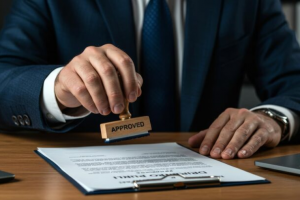


Notaries rarely cross our minds during the ordinary rhythm of daily life until we suddenly need one. That moment of realization often comes at a critical juncture: signing a lease, finalizing a real estate transaction, or legalizing a significant personal agreement. To truly appreciate what a notary brings to the table, it helps to start with the basics. So, what is the meaning of notarized? In short, a notarized document is one that has been officially authenticated by a licensed notary public, who verifies the identities of all signing parties, confirms that no coercion or fraud is taking place, and certifies that every participant is of sound mind and acting of their own free will.
This certification process carries enormous legal weight. What does getting a document notarized mean for the parties involved? It means your agreement is recognized, enforceable, and protected under the law giving everyone involved a legitimate foundation should any dispute arise down the line.
Many people underestimate just how deeply notarization is woven into everyday legal life. Marriage certificates, employment contracts, property deeds, and commercial leases all depend on it. Consider what happens without it: a notarized agreement between two parties becomes the binding thread that prevents either side from walking away without consequence. Without notarization, these documents hold little to no legal standing, leaving participants without recourse if the other party fails to honor their obligations.
Beyond witnessing signatures, notaries carry a broader set of responsibilities. They administer oaths, maintain detailed notary journals, schedule appointments, and complete the formal notarial certification required for documents to be considered legally valid. Each of these duties exists for a reason to safeguard the integrity of legal transactions and protect the people involved in them.
A common question people ask is, how does notarization work? The process is more straightforward than most expect. First, the notary verifies the identity of each signer, typically through government-issued photo identification. Next, they confirm that all parties are signing willingly and understand the nature of the document. Finally, the notary applies their official seal and signature, completing the certification. This seal is what transforms an ordinary document into a legally recognized one.

Another question that frequently surfaces is: Does a contract have to be notarized? Not always but it depends on the type of agreement. Contracts for real estate transactions, powers of attorney, wills, and certain business agreements typically require notarization by law. For other contracts, notarization may not be legally mandated, but it is strongly advisable. Having a notary’s seal on any significant agreement adds a critical layer of legitimacy and makes the document far more defensible if challenged in court.
Understanding how to notarize a document is easier than it used to be, thanks to the growing variety of notarization methods now available. Traditional in-person notarization remains the most common route, visiting a notary’s office, ideally with a scheduled appointment to reduce wait times and ensure your documents are processed on the same visit.
For those who cannot make it in person, remote online notarization offers a fully digital alternative. Through secure video conferencing platforms, notaries can witness the signing of electronic documents and perform remote online document signing with the same legal authority as their in-person counterparts. This option has become particularly valuable for individuals managing time-sensitive transactions from a distance.
There is also the option of a mobile notary, a credentialed professional who travels directly to your location, whether that is your home, office, hospital, or any other site, to perform the necessary notarization services. This is especially helpful for elderly individuals, people with mobility limitations, or anyone whose circumstances make visiting an office difficult.
Every time someone buys a home, formalizes a business partnership, gets married, or accepts a new job offer involving a legally binding contract, Notary Plus More is working in the background conducting a thorough background check on all signing parties to make the process official, secure, and legally enforceable. Their contributions are rarely celebrated, but the protection they provide is real, consistent, and far-reaching.
FINAL THOUGHTS
Whether you need a straightforward in-office appointment, the flexibility of a mobile notary, or the speed of remote online notarization, understanding your options empowers you to approach legal transactions with confidence. Notaries do not just stamp papers they uphold the standard of trust that every legal agreement depends on.